This website uses cookies

This website uses cookies to improve the user experience!

+49 (0) 6126 589 80 10 | [email protected]

plastship Monitored Materials: Compare recyclate quality with data

Material quality only becomes comparable through data


Classify. Compare. Decide with confidence.

Homepage Material quality plastship Monitored Materials

Evaluate recyclate quality transparently and make informed decisions

Assessing recycled plastics without structured data is nearly impossible.

plastship Monitored Materials provides a reliable data foundation to classify, compare and confidently use recyclates.
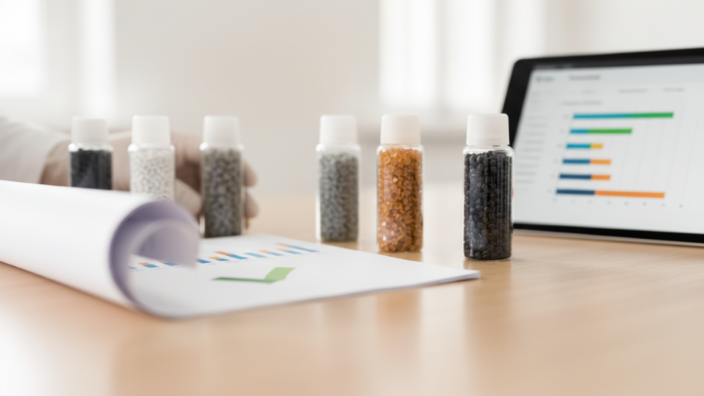
Why recyclate quality is difficult to assess without structured data

Different feedstocks, processing methods and applications mean that recyclates are rarely directly comparable.

Without structured data, uncertainty arises in:

  • material selection
  • sourcing
  • application

Market challenge

Recyclate qualities are often difficult to interpret due to:

  • inconsistent data
  • lack of comparability
  • fluctuating material properties

plastship addresses this with a structured, data-driven approach.

Our solution: plastship Monitored Materials

Data-driven classification and evaluation of recyclate quality.

Monitored Materials combines:
▪️material data
▪️feedstock information
▪️analytical results
into a structured and comparable evaluation system.

We continuously build and expand a structured quality database for recycled plastics.

Goal: make material quality measurable, comparable and transparent.

What Monitored Materials enables

  • Comparison of recyclate qualities

  • Classification of material properties

  • Segmentation by application and feedstock

  • Tracking quality development over time

Systematic comparison and evaluation of recyclates

Structured data allows materials not only to be described, but directly compared.

This creates a solid basis for:

  • Supplier evaluation

  • Quality development

  • Material selection

Material benchmark & quality verification

A central element is the material benchmark.
It translates complex analysis data into:
▪️comparable quality statements
▪️transparent classifications
▪️reliable decision-making

Applications:
▪️material approvals
▪️internal quality assurance
▪️communication across the supply chain

Connecting data, quality and supply

Structured material data supports not only technical decisions, but also:

  • Integration into your processes:

  • Monitored Materials is an integral part of our overall solution

  • Connection to laboratory data and testing

  • Support for compliance and traceability

  • So data becomes an active foundation for:

  • Better decisions

  • Reduced risks

  • More stable supply

Looking to better classify, compare or document recyclate quality?

We show you how to use Monitored Materials effectively in your decision-making processes.

Direct contact

Or get in touch with us directly:

Frequently asked questions about Monitored Materials

  • Through structured, documented data and integration into compliance and traceability processes.

  • - better decision-making
    - increased transparency
    - reduced risk
    - improved supplier evaluation

  • Through standardised data collection, structured evaluation and defined classification criteria.

  • Traditional data is static.
    Monitored Materials enables continuous, dynamic evaluation.

  • A structured data framework for evaluating and comparing recyclates across applications, feedstocks and time.

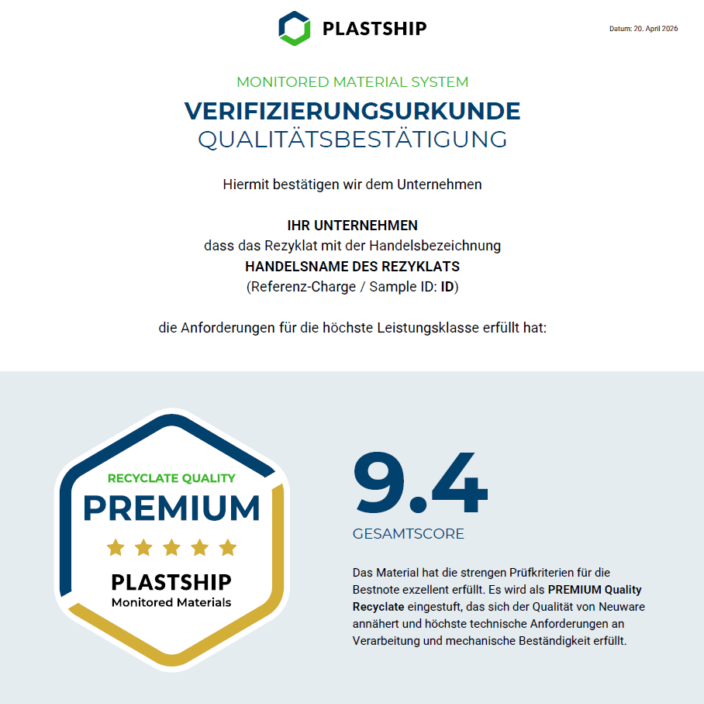
Have your materials tested, compared and classified – secure the label for your high-performance recycled material

Team