This website uses cookies

This website uses cookies to improve the user experience!

+49 (0) 6126 589 80 10 | [email protected]

Recyclate quality needs a common language

White Paper: plastship Monitored Materials

How plastic recyclates can be objectively assessed, reliably compared and documented for external stakeholders.

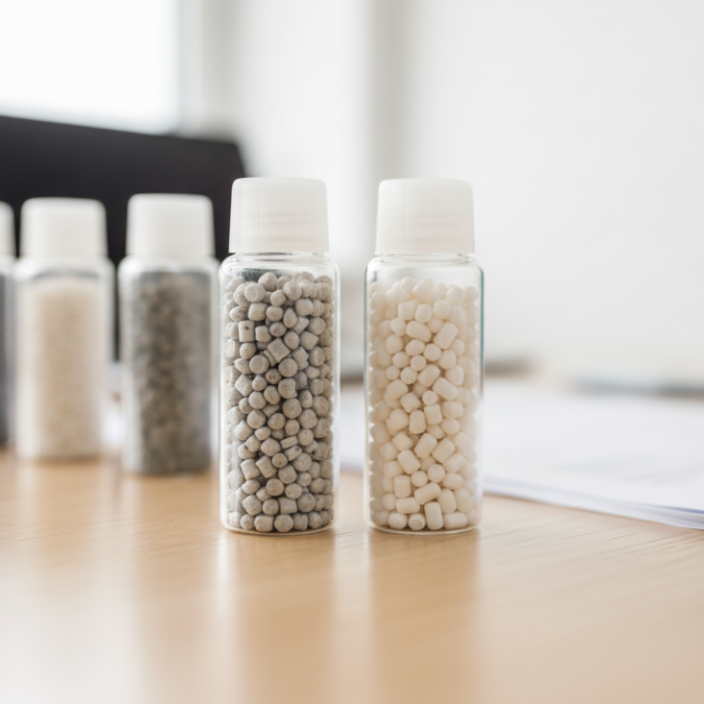
Two recyclates, the same polymer, similar technical data sheets — yet one behaves very differently from the other in processing. For procurement, quality assurance, product development and application engineering, this is one of the key challenges when working with recycled plastics.

Because recyclate quality can be measured.
But it is not automatically comparable.

The white paper “Recyclate quality needs a common language” shows how plastship Monitored Materials translates verified material data, input stream information and benchmarking into a clear quality indicator — with score, quality class, market comparison and optional verification certificate.

Why recyclate quality is so difficult to compare

For virgin material, material types, specifications and technical data sheets are usually well established. With recyclates, the situation is more complex: different input streams, collection systems, sorting qualities and processing methods can lead to very different property profiles — even within the same polymer type.

Technical data sheets are helpful, but they often only provide a limited view of these differences. Testing scope, key values and presentation can vary from supplier to supplier. As a result, procurement, quality assurance and application teams face a high level of interpretation effort — especially when materials need to be approved, compared or documented for customers.

The problem is often not the recyclate itself.
The problem is the lack of a common basis for quality assessment.

The practical consequences:
▪️Offers are difficult to compare.
▪️Material approvals become time-consuming individual projects.
▪️Good recyclate quality cannot always be documented neutrally.
▪️Sourcing decisions remain uncertain.
▪️Brands and manufacturers need reliable proof for the use of recyclates.
The solution: a reliable indicator for recyclate quality

plastship Monitored Materials combines verified material data with information on the input stream and translates it into a standardised assessment. The goal is to create a shared understanding of recyclate quality — across suppliers, applications and market roles.

The system makes quality visible through:
▪️an Overall Quality Score from 0 to 10,
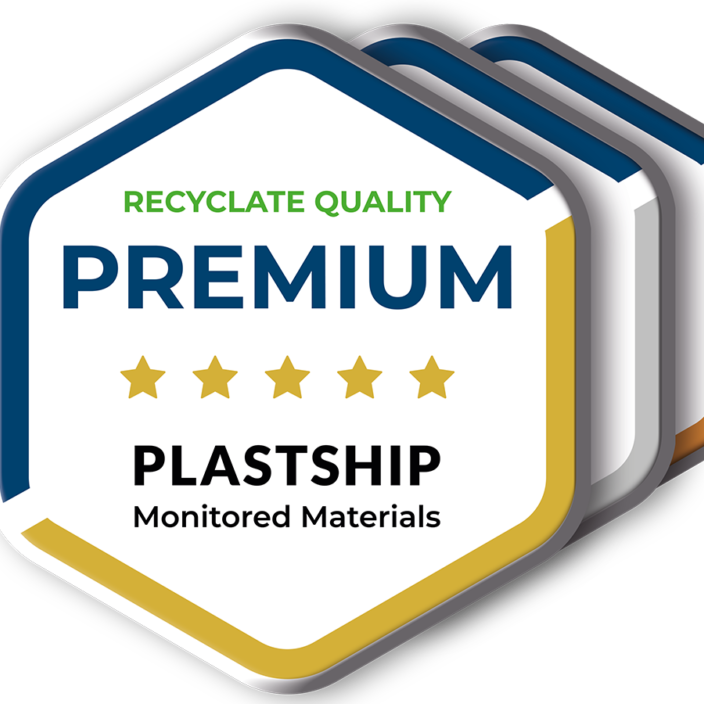
▪️three clear quality classes: Premium, Plus and Proven,
▪️four key quality dimensions,
▪️benchmarking against a growing material database,
▪️and an optional verification certificate as neutral proof of quality.

This turns many individual measurement values into a compact, understandable and comparable statement on material quality.

How Monitored Materials works

  • 1. Testing

    Key material properties are analysed based on defined quality dimensions:

    ▪️Mechanics: How resilient is the material?
    ▪️Appearance: How clean is the material?
    ▪️Odour: How strong is the material’s odour?
    ▪️Purity: How pure is the polymer composition?

    Testing is carried out reproducibly according to established ISO/DIN standards by neutral, specialised testing partners.

  • 2. Assessment

    The results are combined into an Overall Quality Score. This score represents the average of the four quality dimensions and condenses around 40 measurement values into a clear and reliable quality indicator.

  • 3. Classification

    The quality classes Premium, Plus and Proven show the quality level of each material. In addition, benchmarking indicates how a recyclate performs compared with the overall market and with materials from a similar origin group.

Three quality classes for better orientation

  • Premium 8.5–10.0 Close to virgin material. Meets the highest technical requirements.

  • Plus 7.0–8.4 Above-average quality, ideal for demanding applications.

  • Proven 5.5–6.9 Reliable standard recyclate for established areas of application.

Benchmarking instead of gut feeling

A quality score alone does not answer the most important question:

How good is this material compared with other recyclates in the same group?

That is why Monitored Materials classifies verified materials within a growing database — both against the overall market and within the respective origin group, for example post-consumer recyclates.

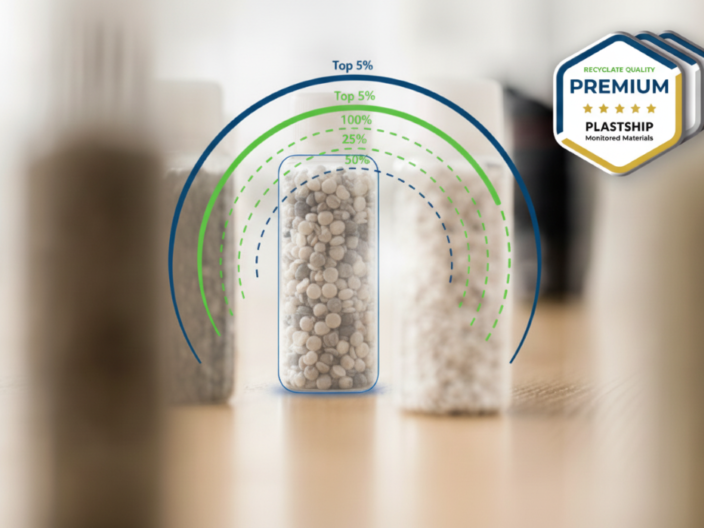
The classification is based on stable benchmark levels such as Top 5%, Top 10%, Top 25% and Top 50%. This makes it easier to see whether a material stands out in the market, performs solidly or needs to be reviewed more closely for specific applications.

This turns recyclate quality from something measurable into something more predictable.

Benefits along the value chain

Standardised quality assessments create value for all market participants.

For processors

Processors gain a reliable basis for material selection, supplier evaluation and approval processes. Fit assessment and best-fit referencing help identify suitable recyclates for specific applications.

For recyclers

Recyclers can document the quality of their materials neutrally, position them in the market and use the results as a sales argument — including an optional verification certificate.

For brands and manufacturers

Brands and manufacturers can plan the use of high-quality recyclates more reliably and provide stronger proof to customers, partners and internal stakeholders.

For associations and market stakeholders

Associations and other market stakeholders gain a more objective data basis for market overviews, standardisation activities and quality requirements.

Already in use

plastship Monitored Materials is not just a concept. The system is already live on the plastship platform – with 226 tested materials, Quality Rankings, Fit Assessment, best-fit references to virgin materials, analytics and PDF verification certificates.

The goal: a central quality database and coordination platform for plastic recyclates that makes quality visible, capacities more predictable and the use of recyclates easier to document.

What you will learn in the white paper
The white paper provides a compact and practical overview of:
▪️why technical data sheets alone are often not enough for recyclates,
▪️why recyclates of the same polymer type can perform differently,
▪️which quality dimensions are relevant for assessment,
▪️how the Overall Quality Score is calculated,
▪️how Premium, Plus and Proven are defined,
▪️why benchmarking is essential for true comparability,
▪️how processors, recyclers, brand owners and associations benefit from standardised quality assessments,
▪️and how plastship Monitored Materials is being developed into a central quality database for plastic recyclates.

Request the white paper free of charge

Find out how standardised quality assessments can help make plastic recyclates more transparent, easier to compare and safer to use.

Request the white paper via the form and receive it directly by email.

Direkter Kontakt

Oder sprechen Sie direkt mit uns:

Become part of the solution - join Plastship today

Team